Full Mouth Restoration in Roselle, IL
Eat your favorite foods, speak with confidence, and smile without a care: implant-supported restorations can give you a fixed, attractive smile that does not move. They suit anyone missing all or most of their teeth, and anyone whose dentures are uncomfortable or fit poorly. At Modern Essence Dentistry, Dr. Llanes offers full-arch implant bridges and implant-supported overdentures, each resembling natural teeth in appearance, feel, and function. With All-on-4, temporary teeth can be attached on the same day your implants go in, so you are not left without teeth while they heal.
What it is
Dental implants set in strategic positions support a complete set of replacement teeth, in the form of either a permanently attached fixed bridge or a removable overdenture with a secure snap fit.
Who it's for
Anyone missing all or most of their teeth, living with failing teeth, or frustrated by loose, uncomfortable traditional dentures who wants a stable, long-term solution.
How we help
Since every patient's needs and jawbone differ, an in-office CBCT 3D scan guides precise implant placement, and you receive custom-designed restorations and a personalized treatment plan.
Worn out by dentures? Implant-supported teeth stay in place and feel entirely natural.

Full-Arch Implant Bridge
- A complete set of teeth permanently anchored to 4–6 dental implants per arch
- Stays put in your mouth around the clock, with no removing, no adhesives, and no slipping
- Bite and chew any food at full power, with no dietary restrictions
- Keeps the jawbone healthy by stimulating it through the implant posts
- Looks completely natural, designed around ideal tooth shape, size, and color
- Depending on technique, it often goes by "All-on-4" or "teeth in a day"
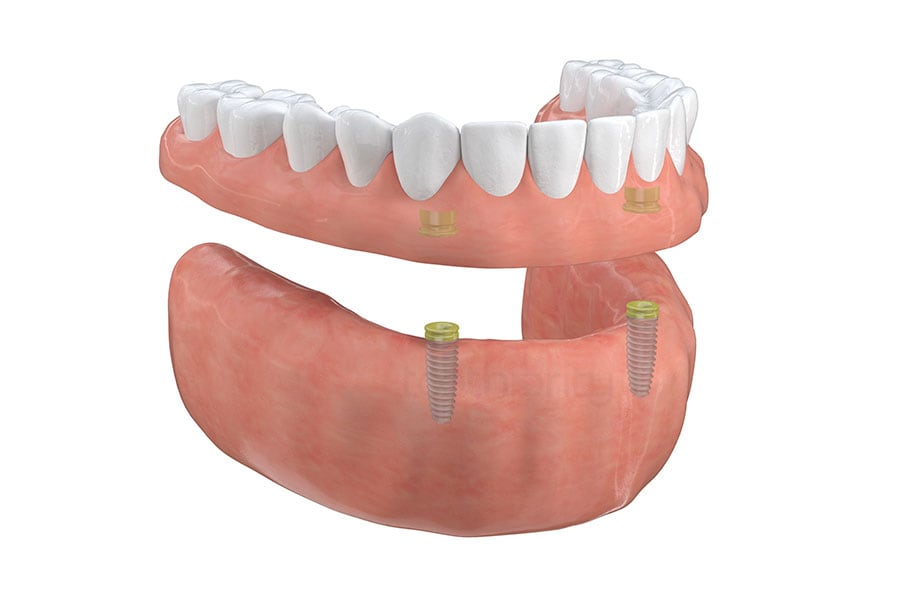
Implant-Supported Overdentures
- Added stability and comfort come from a full denture that snaps securely onto dental implants
- Lifts out at home for cleaning and maintenance, then clicks back into place
- Far steadier than traditional dentures, with no slipping, rocking, or adhesives
- Eat, drink, and speak confidently all day long
- To let your overdentures click into place, Dr. Llanes secures a supporting structure to the implants
- A more budget-friendly alternative to a full-arch fixed bridge

Implants vs. Traditional Dentures
- Bone preservation: By stimulating the jawbone, implants prevent the deterioration that occurs under traditional dentures
- Stability: Anchored to the bone, implant restorations don't slip, shift, or need messy adhesives
- Comfort: No sore spots where loose dentures rub against the gums
- Eating: Bite and chew normally, whereas traditional dentures cut chewing capacity by up to 75%
- Taste: Because implant bridges leave the roof of your mouth uncovered, you fully taste your food
- Appearance: Bone loss under traditional dentures leads to a sunken, collapsed look, and implants prevent that from happening
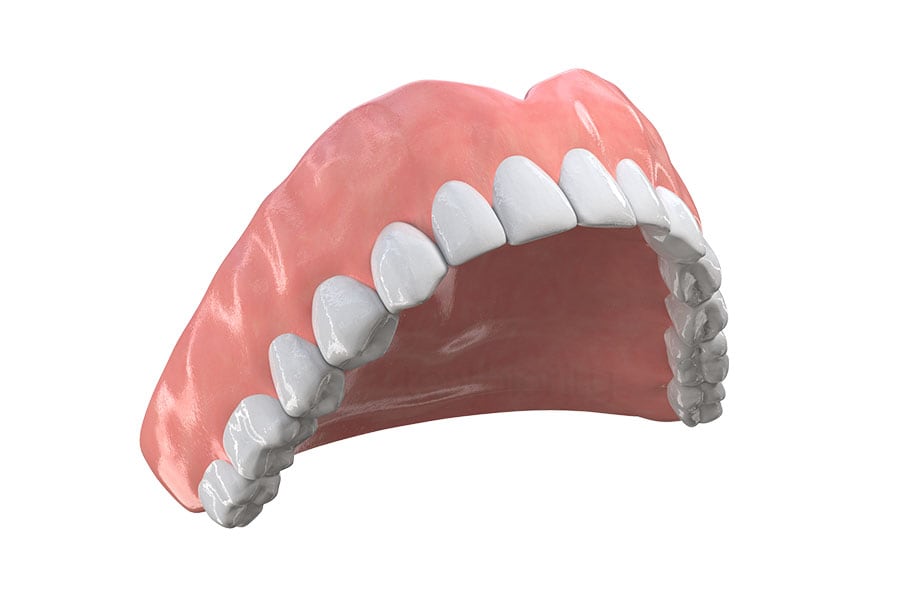
Problems with Traditional Dentures
- With no tooth roots to stimulate it, the jawbone resorbs and shrinks, and dentures loosen over time
- As the bone changes, traditional dentures need constant adjustment and eventually replacement
- Keeping dentures in place often calls for sticky adhesives
- Many patients struggle to eat, speak, and taste their food
- Ongoing bone loss produces a collapsed, aged facial appearance
- By replacing the root along with the crown, implant-supported restorations solve every one of these problems
No other tooth replacement preserves your jawbone and maintains your facial structure the way dental implants do.
What to Expect at Your Visit
Visit Steps
- Comprehensive evaluation: Dr. Llanes examines your mouth and jawbone with digital X-rays and an in-office CBCT 3D scan
- Custom treatment plan: We build a personalized plan around your bone density, the number of implants needed, and the restoration type
- Implant placement: Titanium implants are surgically placed, with a mild oral relaxation medication available if you feel nervous
- Healing: Over several months the implants integrate with the jawbone, and temporary teeth may be provided
- Final restoration: Your custom bridge or overdenture is fitted or permanently placed
Helpful Tips
- Implant count, healing time, and cost all hinge on your specific situation, since treatment plans differ from patient to patient
- Significant bone loss may mean bone grafting is needed before implant placement
- During the healing period, temporary teeth can be provided so you're never without a smile
- Following all post-surgical care instructions supports successful healing
- Keep up excellent oral hygiene around your implant restorations
- Ask about flexible financing options that make full mouth restoration affordable
Frequently Asked Questions
Dr. Llanes determines the optimal number using an in-office CBCT 3D scan that shows the bone in three dimensions, so implants can be placed where the support is strongest. This planning stage is a big part of what makes a full mouth restoration successful and long-lasting. During your consultation we will explain exactly how many implants your case calls for and why.
It is important to understand that these same-day teeth are a temporary restoration. During the first few months your implants are fusing with the jawbone, so the temporary set is built to look good and let you function while protecting the healing implants. Once integration is complete, typically three to six months later, your final, permanent restoration is placed. Whether you are a candidate for same-day teeth depends on your bone and overall treatment plan, which we assess beforehand.
An implant-supported overdenture, by contrast, snaps securely onto the implants but lifts out at home for cleaning. It is very stable compared with a traditional denture, often costs less than a fixed bridge, and some patients simply prefer being able to remove it. Bone density and the number of implants also factor in. Dr. Llanes will walk you through the trade-offs of each and help you choose the restoration that best fits your daily life.
In many cases bone grafting can rebuild the jawbone so it is once again able to support implants, restoring the foundation a full mouth restoration needs. In other situations, we can use strategic implant placement that takes advantage of the areas where solid bone remains, sometimes avoiding grafting altogether. Dr. Llanes will evaluate your bone with 3D imaging and map out the path that works for your situation, so years of denture wear do not have to mean going without a stable, lasting smile.
If you need preparatory work such as bone grafting or extractions first, the overall timeline can extend to roughly nine to twelve months to allow that healing before implants go in. Throughout the process you are not left without teeth: temporary teeth are provided during healing so you can eat, speak, and smile with confidence while your full mouth restoration comes together. We will give you a personalized timeline once we have reviewed your imaging.
It helps to look at the value over the long term. While the upfront investment is significant, implant-supported teeth are built to last for many years and do not require the periodic relines and replacements that traditional dentures need, so they often prove more economical over a lifetime. At our Roselle office we provide a detailed written estimate before treatment begins and offer flexible financing options to make your full mouth restoration more manageable.
- Fixed bridge: clean it just like natural teeth, brushing twice a day and using a water flosser or special floss to clean underneath and around each implant where the bridge meets the gum.
- Overdenture: remove it nightly to clean both the appliance and the attachments, then brush your gums and the implant sites before clicking it back into place.
Put loose dentures out of your mind for good. Request your full mouth restoration evaluation today.
Dental implant care at Modern Essence Dentistry is provided by general dentists. Our dentists do not hold a license in the dental specialties of oral and maxillofacial surgery, periodontics or prosthodontics.