Am I a Candidate for Dental Implants?
Three short questions, starting with how many teeth you are missing, point you to the implant option worth bringing up at your evaluation.

How many teeth are you missing?
Choose the answer closest to your situation.
Choose an answer to continue.
What matters most to you?
Choose any that apply, or skip to the next question.
Anything Dr. Llanes should know?
These all come up in planning, so it helps to mention them early. Choose any that apply, or go straight to your result.
A Single Implant Is Worth Asking About
A gap left by one tooth is the situation a single implant and crown are built for. An exam and a 3D scan will confirm whether the site has enough bone and what your plan would involve.
Read about single tooth implants
What you said matters most
- Teeth that stay in. Crowns, bridges and full-arch teeth fixed to implants stay in your mouth, and you brush them in place.
- Not going without teeth. For a full arch, All-on-4 treatment can include same-day temporary teeth, and immediate dentures go in on the day teeth are removed. For one or a few teeth, Dr. Llanes will talk through your options for the healing months.
- Leaving healthy teeth alone. An implant stands on its own, so the teeth beside the gap do not have to be reshaped to hold it.
- Knowing the cost first. The evaluation ends with an itemized treatment estimate. Self-pay patients get clear cash pricing, and CareCredit offers monthly payments.
- Feeling relaxed. Placement is done under local anesthesia, and Dr. Llanes can prescribe a mild oral relaxation medication to take before your visit.
- Chewing comfortably. An implant is anchored in the jawbone, so the tooth on top of it holds steady when you bite down.
Things Dr. Llanes will want to review with you
- Bone volume. Grafting can often rebuild a thin site, and your 3D scan shows whether yours needs it.
- Gum health. Gum disease is treated first, so the implant starts out in healthy tissue.
- Smoking or vaping, which can slow healing.
- A health condition that affects healing. A list of your conditions and medications helps.
- Blood thinners or a bone-density medication. Bring the names and doses with you.
- Clenching or grinding, which puts extra force on implants. A night guard may become part of your plan.
These are part of planning your treatment, and none of them is a reason to put off the evaluation.
This check is a starting point, not a diagnosis; only an exam and 3D imaging can confirm what will work. Your answers stay on this page and are not sent or saved.
An Implant Bridge Is Worth Asking About
With several teeth missing, a bridge carried by a few implants can replace them without leaning on your natural teeth for support. Your evaluation shows how many implants your gaps would need and where they can go.
Read about replacing multiple teeth
What you said matters most
- Teeth that stay in. Crowns, bridges and full-arch teeth fixed to implants stay in your mouth, and you brush them in place.
- Not going without teeth. For a full arch, All-on-4 treatment can include same-day temporary teeth, and immediate dentures go in on the day teeth are removed. For one or a few teeth, Dr. Llanes will talk through your options for the healing months.
- Leaving healthy teeth alone. An implant stands on its own, so the teeth beside the gap do not have to be reshaped to hold it.
- Knowing the cost first. The evaluation ends with an itemized treatment estimate. Self-pay patients get clear cash pricing, and CareCredit offers monthly payments.
- Feeling relaxed. Placement is done under local anesthesia, and Dr. Llanes can prescribe a mild oral relaxation medication to take before your visit.
- Chewing comfortably. An implant is anchored in the jawbone, so the tooth on top of it holds steady when you bite down.
Things Dr. Llanes will want to review with you
- Bone volume. Grafting can often rebuild a thin site, and your 3D scan shows whether yours needs it.
- Gum health. Gum disease is treated first, so the implant starts out in healthy tissue.
- Smoking or vaping, which can slow healing.
- A health condition that affects healing. A list of your conditions and medications helps.
- Blood thinners or a bone-density medication. Bring the names and doses with you.
- Clenching or grinding, which puts extra force on implants. A night guard may become part of your plan.
These are part of planning your treatment, and none of them is a reason to put off the evaluation.
This check is a starting point, not a diagnosis; only an exam and 3D imaging can confirm what will work. Your answers stay on this page and are not sent or saved.
Full Arch Implants Are Worth Asking About
A complete arch of teeth can be fixed to implants, including the All-on-4 approach with temporary teeth on the day of surgery when your case allows it. If you wear a denture now, an implant-supported denture or mini implants may also fit. The evaluation sorts out which one suits your bone.
Read about full arch implants and All-on-4
What you said matters most
- Teeth that stay in. Crowns, bridges and full-arch teeth fixed to implants stay in your mouth, and you brush them in place.
- Not going without teeth. For a full arch, All-on-4 treatment can include same-day temporary teeth, and immediate dentures go in on the day teeth are removed. For one or a few teeth, Dr. Llanes will talk through your options for the healing months.
- Leaving healthy teeth alone. An implant stands on its own, so the teeth beside the gap do not have to be reshaped to hold it.
- Knowing the cost first. The evaluation ends with an itemized treatment estimate. Self-pay patients get clear cash pricing, and CareCredit offers monthly payments.
- Feeling relaxed. Placement is done under local anesthesia, and Dr. Llanes can prescribe a mild oral relaxation medication to take before your visit.
- Chewing comfortably. An implant is anchored in the jawbone, so the tooth on top of it holds steady when you bite down.
Things Dr. Llanes will want to review with you
- Bone volume. Grafting can often rebuild a thin site, and your 3D scan shows whether yours needs it.
- Gum health. Gum disease is treated first, so the implant starts out in healthy tissue.
- Smoking or vaping, which can slow healing.
- A health condition that affects healing. A list of your conditions and medications helps.
- Blood thinners or a bone-density medication. Bring the names and doses with you.
- Clenching or grinding, which puts extra force on implants. A night guard may become part of your plan.
These are part of planning your treatment, and none of them is a reason to put off the evaluation.
This check is a starting point, not a diagnosis; only an exam and 3D imaging can confirm what will work. Your answers stay on this page and are not sent or saved.
Plan the Replacement Before the Tooth Comes Out
When a tooth cannot be saved, the extraction and the implant are worth planning together. A 3D scan shows the bone around the root, and if the site needs grafting once the tooth is out, we do that here in our office.
Read about single tooth implants
What you said matters most
- Teeth that stay in. Crowns, bridges and full-arch teeth fixed to implants stay in your mouth, and you brush them in place.
- Not going without teeth. For a full arch, All-on-4 treatment can include same-day temporary teeth, and immediate dentures go in on the day teeth are removed. For one or a few teeth, Dr. Llanes will talk through your options for the healing months.
- Leaving healthy teeth alone. An implant stands on its own, so the teeth beside the gap do not have to be reshaped to hold it.
- Knowing the cost first. The evaluation ends with an itemized treatment estimate. Self-pay patients get clear cash pricing, and CareCredit offers monthly payments.
- Feeling relaxed. Placement is done under local anesthesia, and Dr. Llanes can prescribe a mild oral relaxation medication to take before your visit.
- Chewing comfortably. An implant is anchored in the jawbone, so the tooth on top of it holds steady when you bite down.
Things Dr. Llanes will want to review with you
- Bone volume. Grafting can often rebuild a thin site, and your 3D scan shows whether yours needs it.
- Gum health. Gum disease is treated first, so the implant starts out in healthy tissue.
- Smoking or vaping, which can slow healing.
- A health condition that affects healing. A list of your conditions and medications helps.
- Blood thinners or a bone-density medication. Bring the names and doses with you.
- Clenching or grinding, which puts extra force on implants. A night guard may become part of your plan.
These are part of planning your treatment, and none of them is a reason to put off the evaluation.
This check is a starting point, not a diagnosis; only an exam and 3D imaging can confirm what will work. Your answers stay on this page and are not sent or saved.
What Decides Candidacy
The check above points you toward an option. These are the things Dr. Llanes actually measures before recommending one.
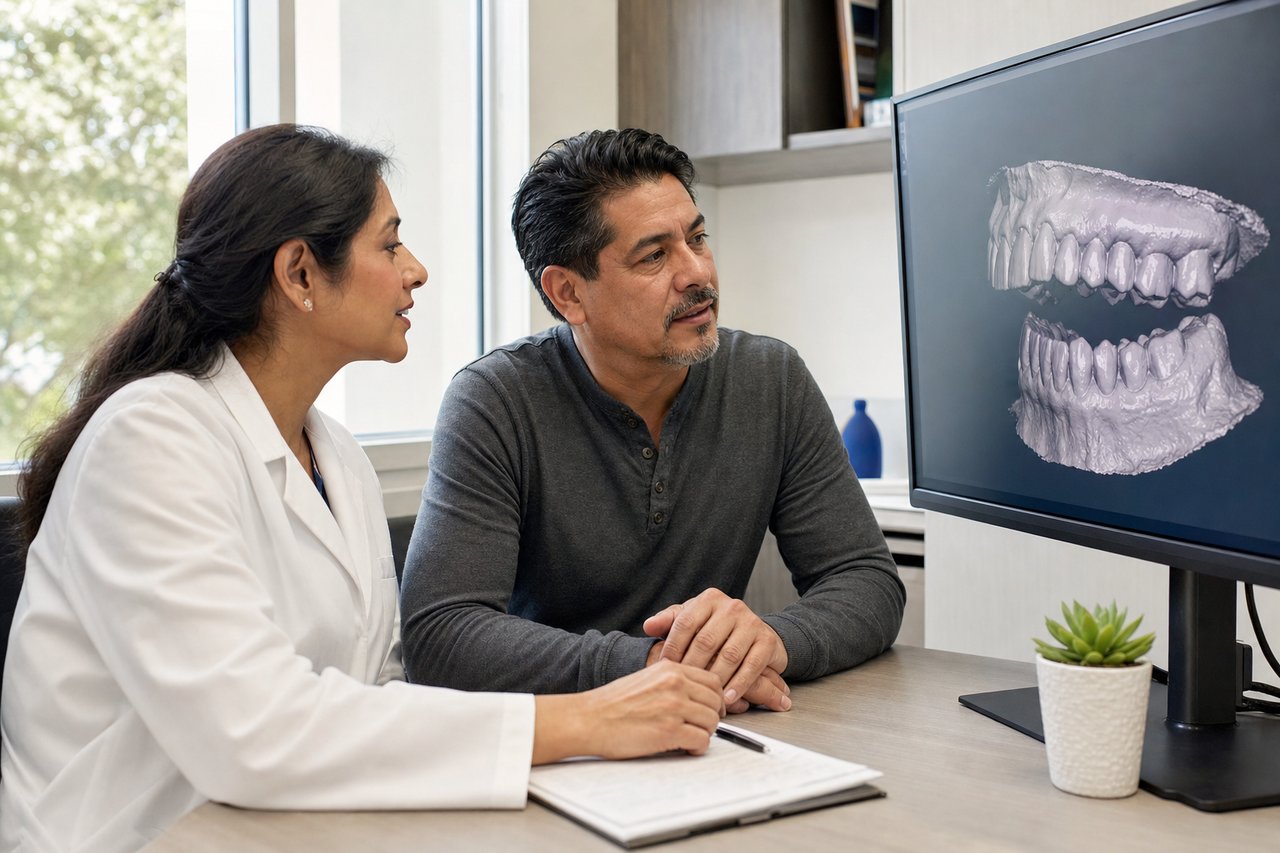
- Bone. A 3D CBCT scan shows the height and width of the bone at each site, and where the nerves and sinus sit.
- Gums. Healthy gum tissue is what holds an implant long term, so any gum disease is treated first.
- Bite. How your teeth meet, and whether you clench or grind, shapes how many implants you need and where.
- Health and medications. Conditions and medicines that affect healing are reviewed and planned around.
Frequently Asked Questions
Get a Real Answer About Implants
An implant evaluation with Dr. Llanes includes 3D imaging and an itemized treatment estimate, so you know where you stand and what treatment would cost.
Dental implant care at Modern Essence Dentistry is provided by general dentists. Our dentists do not hold a license in the dental specialties of oral and maxillofacial surgery, periodontics or prosthodontics.